

Powerful ESG Integration in Financial Planning: Transform Budgets, CapEx & Incentives for Sustainable Growth

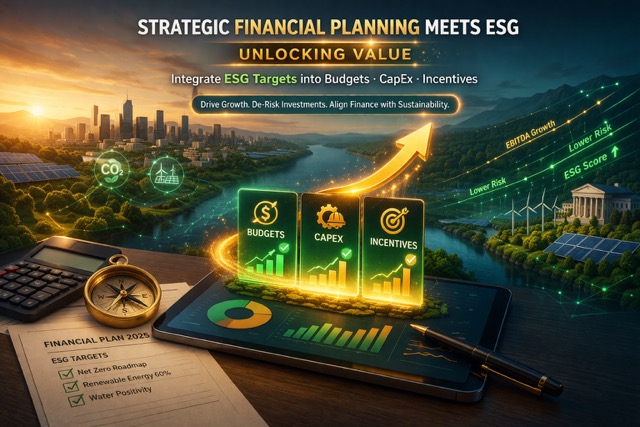
Powerful ESG Integration in Financial Planning: Transform Budgets, CapEx & Incentives for Sustainable Growth
Financial planning meets ESG, integrating ESG targets into budgets, CapEx, and incentives.
In the recent past, most businesses around the world have adopted ESG goals, which typically cover areas such as emissions reduction, workforce diversity, and commitment to net-zero objectives. However, a key issue remains: these years’ goals are often isolated from financial planning processes and systems. All boards have visibility of annual financial budgets, capital allocation, and executive incentives, but she often remains outside the financial score. Specifically, CapEx or capital expenditure-related decisions on sustainability frequently do not integrate or align with ESG strategic commitments, leading to missed opportunities of delivering a cohesive strategy.
The structural gap: why egg commitments fail financially
At the heart of failed financial ESG commitments it has a capital allocation problem. This is something regulators have also begun to detect around the world. The European Securities and Markets Authority and the Financial Conduct Authority are beginning to see inconsistencies between how sustainability-related financial commitments are set-out and the underpinning financial model. In fact, the International Energy Agency has acknowledged that corporate investment project stories are not yet integrated into an organisation’s desired net-zero pathways.
There are many examples from the corporate world to reinforce this. If we had to revisit its short-term emissions targets in 2023 due to underlying capital allocation discrepancies and market conditions. Further, she’ll have to face investor scrutiny due to a potential misalignment between its transition strategy and in-progress hydrocarbon investments. These are not actually strategic failures; in fact, they are material gaps in the financial integration process. From a capital markets perspective, regulators and investors are no longer happy with high-level ESG goals that work in isolation. Asset managers are increasingly looking for how embedded the ESG targets are in an organization’s financial plans, to what extent capital allocation has been made to support such transition, and how an organization’s financial forecasts are likely to reflect its overall performance.
Thus, this creates an opportunity to build on capital allocation discipline by way of which financial planning and ESG are closely coupled to deliver realistic outcomes.
The financial integration problem: why budgets and ESG targets diverge
The primary causes of ESG under performance is not lack of strategic planning by management, but rather it is underperformance in the financial budgeting process. In most businesses, ESG targets have long-term horizons, whereas the budgets are set out over annual financial cycles. This creates a mismatch between short-term financial control and long-term ESG strategic planning. For instance, organizations require significant upfront investment to support their decarbonization initiatives, such as electrification or low-carbon product range engineering, while also competing with short-term margin pressure. There are multiple examples of this tradeoff in the industry. The European Commission, through the CSR guidelines, has laid down pointers on how organizations must align their sustainability goals with their financial planning process. In addition, the network for greening the financial system has also set out certain guardrails that organizations need to be aware of while integrating their sustainability review process into their financial forecast.
In the recent past, Unilever has had to explicitly link its climate transition to financial pressure in the supply chain.
Likewise, the Volkswagen Group needed to cut back on its ESG investment in order to meet macroeconomic conditions and underlying capital constraints. All of these examples show that ESG planning is not necessarily unrealistic, but it is not deeply embedded into the financial landscape of decision-making within the organization. At the management level, this often results in a government’s blind spot, which means while boards approve long-term ESG strategies, they are not always reflected in the annual operating budget – driving a short-term divergence that often goes unnoticed until an ESG assessment forces a reconciliation to be done.
Capital allocation has the real lever: CapEx and investment decisions.
Capital expenditure of an organization helps determine various critical areas such as the asset configuration, technology posture, climate performance, and the resulting long-term cost structure. This is the reason why regulators are calling for CapEx alignment with ESG planning. The European Union taxonomy and CSRD frameworks require organisations to set out capital expenses against their climate objectives so that there is transparency on investment decisions that are required to support the climate goals.
In response, corporates are beginning to transform their business model by recalibrating their capital to pivot away from traditional fuel sources towards renewable sources such as wind energy. This is now being evidenced in organisational practices such as CapEx pipelines, which are being linked with ESG targets. The resulting implication for boards is significant. Capital allocation decisions are no longer pure financial metrics – instead, they are intrinsically linked with transition risks, regulatory pathways, and long-term asset visibility in the light of ESG performance.
Tools to align capital with climate: MACC and internal carbon pricing
To drive this alignment between ESG and financial planning businesses around the world requires various tools to help them run their operations few critical tools are as follows:
Marginal abatement cost curves (MACC):
MACC provides a comprehensive view of the organization of the underlying cost per unit to reduce emissions. It also provides a view of total apartment potential and how to sequence investment priorities. As such, organizations are able to gain visibility of low-cost but high-impact initiatives and capital-intensive transition technologies. This allows them to balance the trade-off between incurring cost and driving emissions reduction. The International Energy Agency has run various studies that demonstrate that the MACC is effective in helping to prioritise decarbonisation pathways.
Internal carbon pricing colony:
This tool helps to introduce financial input in the decision-making process. It creates an indicative cost of emissions that allows a real-time comparison between projects on a like-for-like basis and incorporates transition risk into investment assessments. This helps organisations align their capital allocation strategies with target regulatory scenarios.
Many organizations across the world are increasingly adopting such tools. For instance, Microsoft has incorporated an internal carbon-free tool that helps to influence investment decisions while evaluating carbon pricing as part of their project planning process from a board point of view. These tools help to effectively bridge the gap between ESG ambitions and financial discipline.
Incentive architecture: executive pay and ESG outcomes
Executive incentives are perhaps the most important lever in determining how well ESG is integrated into the financial planning process. A large number of organisations are now directly linking executive pay with the ESG matrix. The European banking authority and financial stability board have highlighted that there is a need to set up a robust framework for climate related incentives in the real world, there are multiple examples of organisations following this principle. For instance, both HSBC and BP have introduced climate related factors in determining how their executive pays are structured. However, poorly designed incentive structures can create some discrepancies:
- Managers may end up optimising ESG metrics rather than delivering tangible outcomes.
- Emissions may be shifted across the value chain rather than actually being reduced, for example, through outsourcing.
- Long-term investments may lose out on the priority structure in favour of short-term goals.
Due to these reasons, boards must set up remuneration committees that have to assess how the ESG incentives are being executed and governed across the organization. They must be followed with the same rigour as usual financial governance, so that they are monitored for unintended consequences, and should be auditable and evidence-based.
KPI design: avoiding distortions
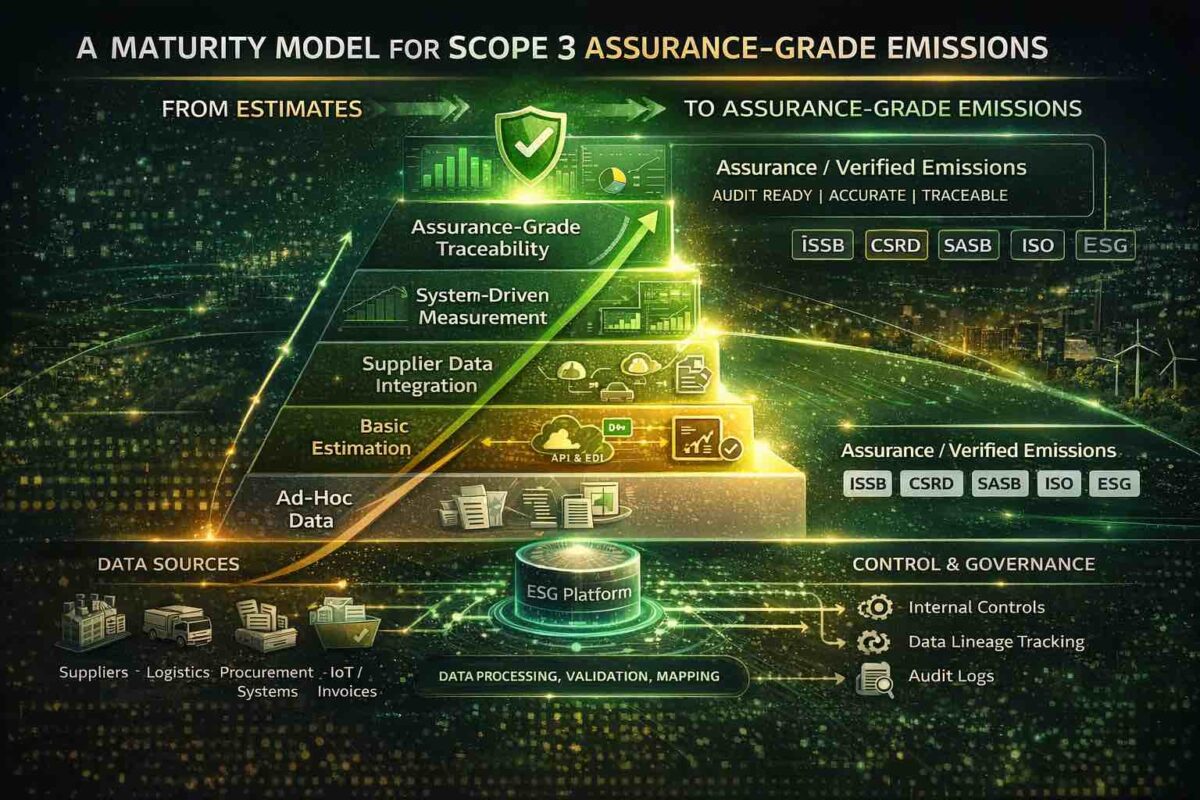
KPIs are one of the links in the ESG strategy design process. A common issue is that the matrix might appear meaningful on paper, but it does not deliver its intended outcomes. For instance, emission intensity might improve due to revenue growth but not be caused by an actual reduction. Another example is the supplier ESG score improving, but being reliant on self reported unverifiable data. Academic research and regulatory reviews have raised these issues in the public domain. In fact, the organization for Economic Cooperation and development has acknowledged that improperly designed ESG metrics has the potential to distort the decision making process and dilute the comparability between businesses. As such, in order to avoid distortion, there must be a sense of discipline in how KPIs are designed:
- The KPIs must combine both absolute and intensity-related metrics.
- They must be directly traceable to operational metrics such as actual energy use per facility.
- They must also be traceable to source systems and be consistent over time.
From a capital markets perspective, credibility of KPIs has a significant impact on how an organization is valued. Investors tend to discount valuations for businesses with underlying metrics that cannot be traced or boards that do not challenge or review the actual KPI design process.
The new ESG operating model: integrating finance and sustainability
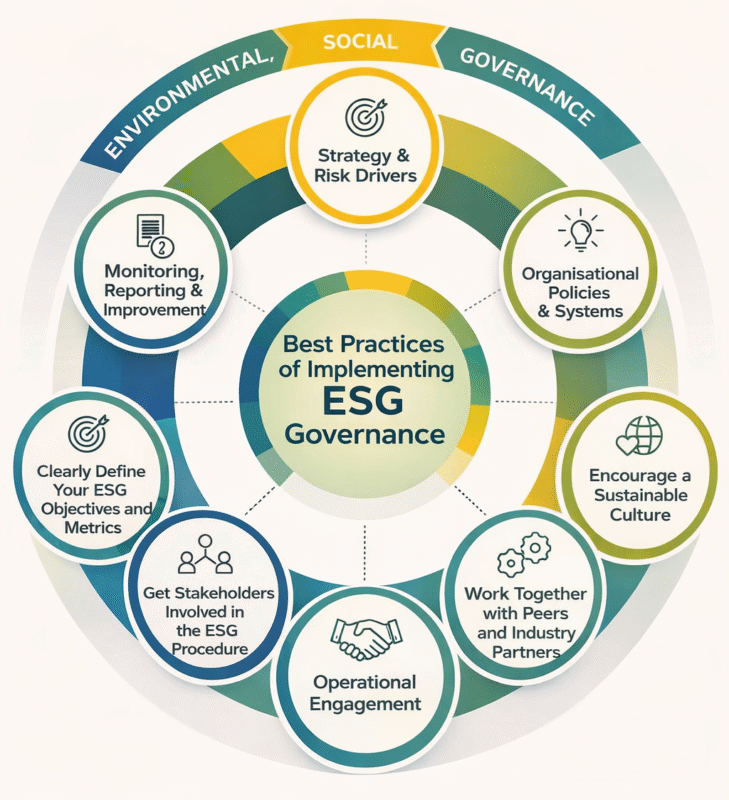
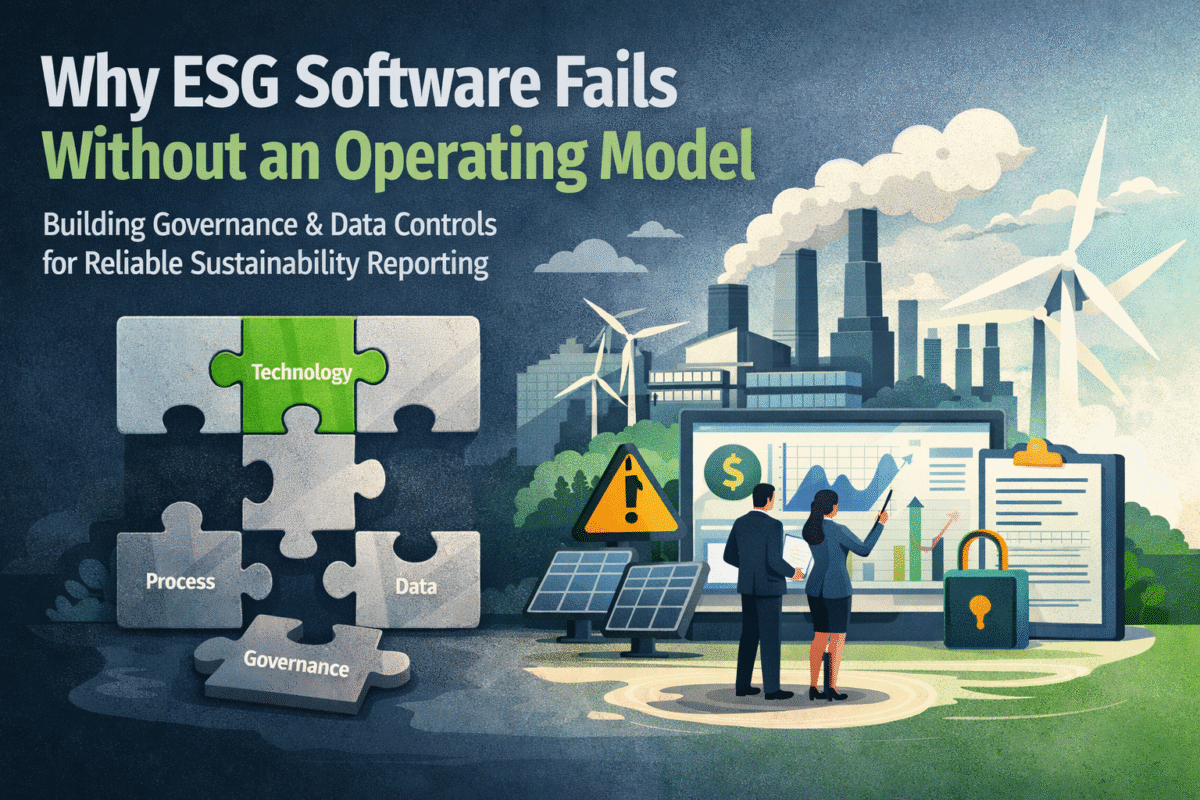
The optimal solution to avoid alignment issues between ESG pathways and financial management is to adopt an entirely new operating model that closely integrates the two. The model has a few defining characteristics.
- Integrated planning: ESG does not exist in isolation, but is deeply entrenched in annual operating plans, financial forecasts, and different what if analysis.
- Capital alignment: capital allocation processes are mirrored with climate transition pathways. Using tools such as carbon pricing and MCC, organizations must be able to disclose their actual capital expenditure performance against their ESG goals.
- Incentive coherence: executive pay has to be linked directly with long-term ESG outcomes and be free from short-term buyers
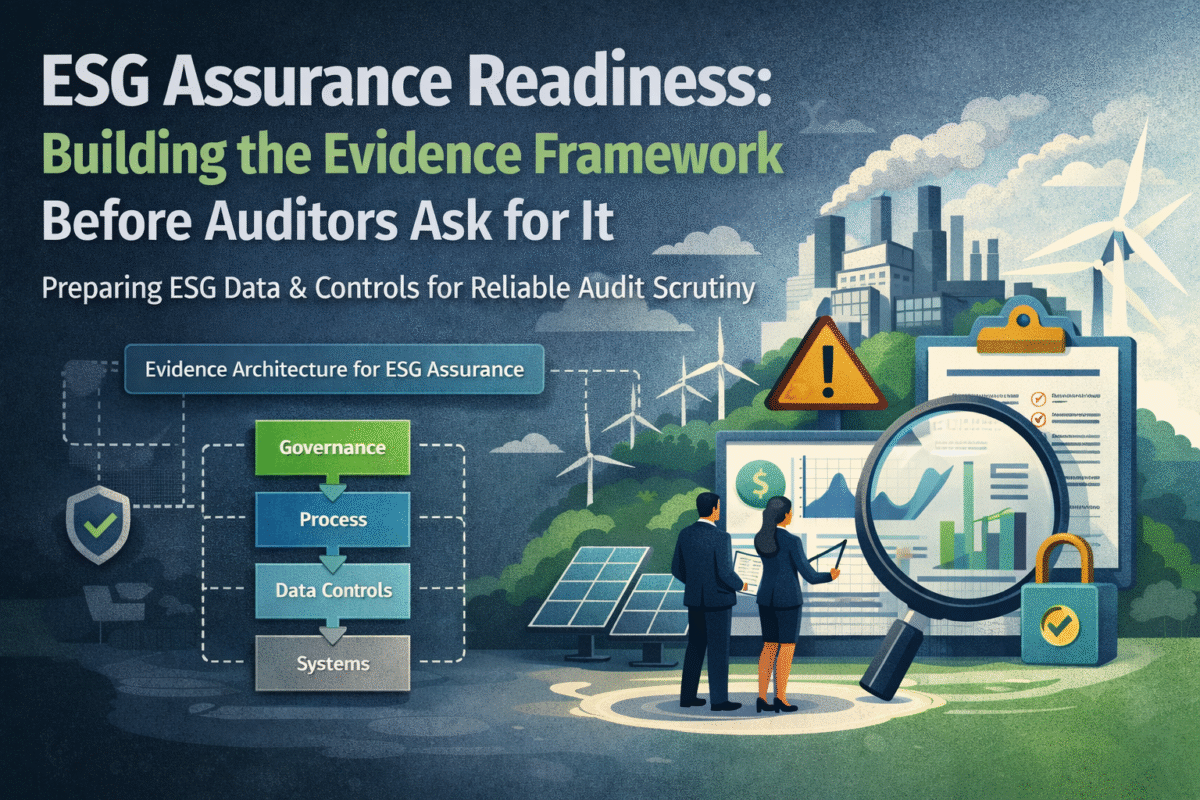
- Data and governance discipline: the ESP matrix should be independently verifiable and traceable, and be aligned with existing financial reporting standards
The International Sustainability Standards Board (ISSB) now stipulates that organisations disclose how their sustainability risks are affecting their financial position. The European Commission, through European Sustainability Reporting Standards (ESRS), is setting out guidelines to integrate sustainability and financial reporting. From the capital markets perspective, these signal a structural shift in how ESG should no longer be viewed as a separate disclosure, but considered an integral part of the financial planning and reporting process. At the board level, this must drive ESG governance away from simple disclosures to an intrinsic part of the capital allocation and financial planning process. Organisations that treat ESG as an intrinsic element of their overall financial functioning will command a premium from investors and regulators and be able to position themselves as long-term value creators.
This is precisely where Corpstage consulting services and CorpStage ESG 360 platform creates value by integrating financial data with ESG data allowing organisations to comply with reporting requirements confidently. Download the Financial planning meets ESG, integrating ESG targets into budgets, CapEx, and incentives–